
Class 6 Science Chapter 3 Worksheet - Mindful Eating a Path to a Healthy Body
Healthy eating habits begin with understanding what our body needs. This Class 6 Science Chapter 3 Worksheet on Mindful Eating: A Path to a Healthy Body is designed to help students revise important concepts such as nutrients, balanced diet, healthy food choices, food labels, and good eating habits. Regular worksheet practice helps children strengthen their understanding, improve problem-solving skills, and gain confidence before school exams.
All the worksheets are prepared according to the latest CBSE syllabus and follow the NCERT curriculum, making them suitable for classroom learning, homework, and revision. Every worksheet is available in an easy-to-download PDF format and includes detailed answers for quick self-checking and better learning. At CBSEClassWorkSheets, we create chapter-wise worksheets that make learning simple, enjoyable, and effective for every Class 6 student.
Other Class 6 Worksheets
Mindmaps of Class 6 Science Chapter 3 - Mindful Eating a Path to a Healthy Body
NCERT Class 6 Science Chapter 3: Mindful Eating A Path To A Healthy Body - Question & Answer
NCERT Class 6 Science Chapter 3 Question Answer
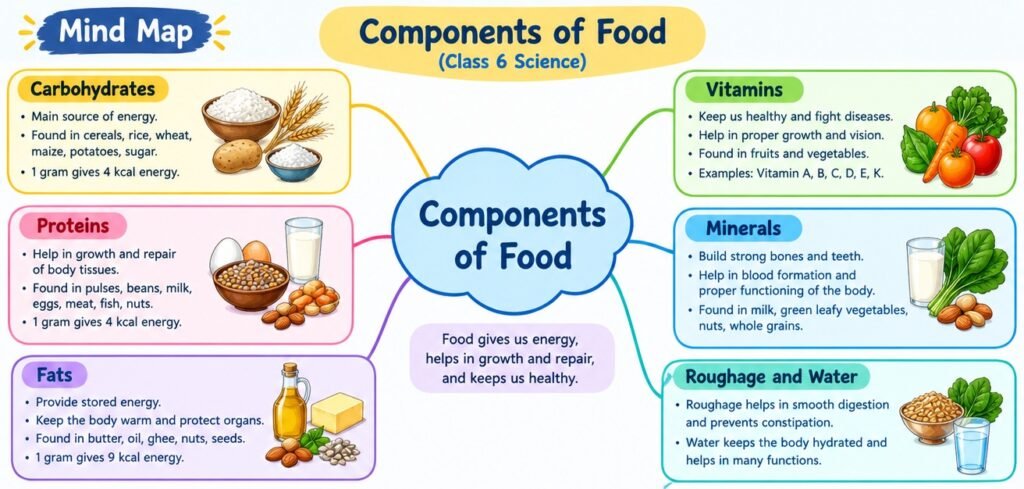
Components of Food
The food we eat contains different components that are needed for energy, growth, repair, protection from diseases, and proper functioning of the body. The major nutrients are carbohydrates, proteins, fats, vitamins, and minerals. Our body also needs roughage and water as essential components of the diet.
1. Carbohydrates
- Carbohydrates are one of the main sources of energy for our body.
- Foods such as rice, wheat, maize, potatoes, and sugar contain carbohydrates.
- Starch is a type of carbohydrate.
- One gram of carbohydrate provides about 4 kcal of energy.
- Carbohydrate-rich foods give us the energy needed for our daily activities.
- Excessive intake of sugary and highly processed foods should be avoided.
Examples
Rice, wheat, maize, potato, sugar, bread and chapati
2. Proteins
- Proteins are important for the growth and repair of body tissues.
- They are especially important for growing children.
- Foods from both plants and animals can provide proteins.
- Good plant sources include pulses, beans, peas, soya beans and nuts.
- Animal sources include milk, paneer, eggs, fish and meat.
- Proteins are therefore called body-building nutrients.
- One gram of protein provides about 4 kcal of energy.
Examples
Gram, moong, peas, kidney beans, soya bean, milk, paneer, eggs and fish
3. Fats
- Fats are an important source of energy for our body.
- They can provide stored energy for the body.
- Fats also help keep the body warm and protect some internal organs.
- Common sources include oil, butter, ghee, nuts and seeds.
- One gram of fat provides about 9 kcal of energy, making it a concentrated source of energy.
- We should include fats in our diet in appropriate amounts.
Examples
Butter, oil, ghee, peanuts, coconut, nuts and seeds
4. Vitamins
- Vitamins are required by our body in small amounts, but they are essential for good health.
- They help in proper growth and protect the body from various diseases.
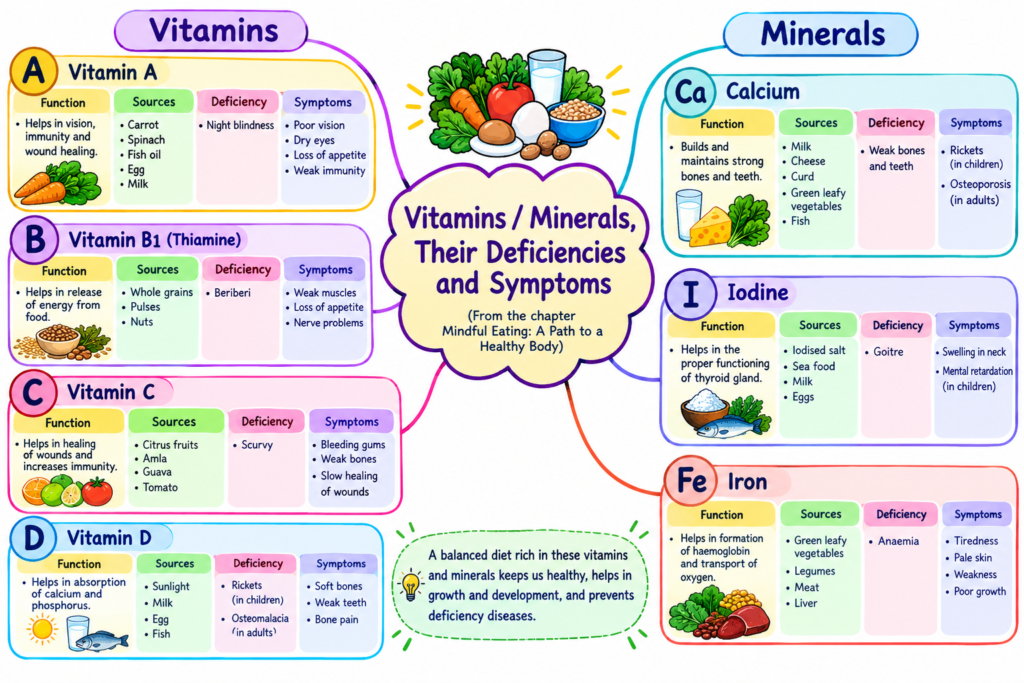
- Vitamins A, B1, C and D are discussed in this chapter.
- Vitamins are called protective nutrients along with minerals.
5. Minerals
- Minerals are needed by our body in small quantities but are essential for good health.
- They help in body functions and protect us from certain deficiency disorders.
- Important minerals discussed in this chapter include calcium, iodine and iron.
6. Roughage
- Roughage is also called dietary fibre.
- It does not provide nutrients to the body, but it is an essential component of our food.
- It helps the body get rid of undigested food.
- It ensures the smooth passage of stools and helps prevent constipation.
- Good sources include green leafy vegetables, fresh fruits, whole grains, pulses and nuts.
7. Water
- Water is an essential part of our diet.
- It helps the body absorb nutrients from food.
- It helps remove waste from the body through sweat and urine.
- We should drink sufficient water regularly to remain healthy.
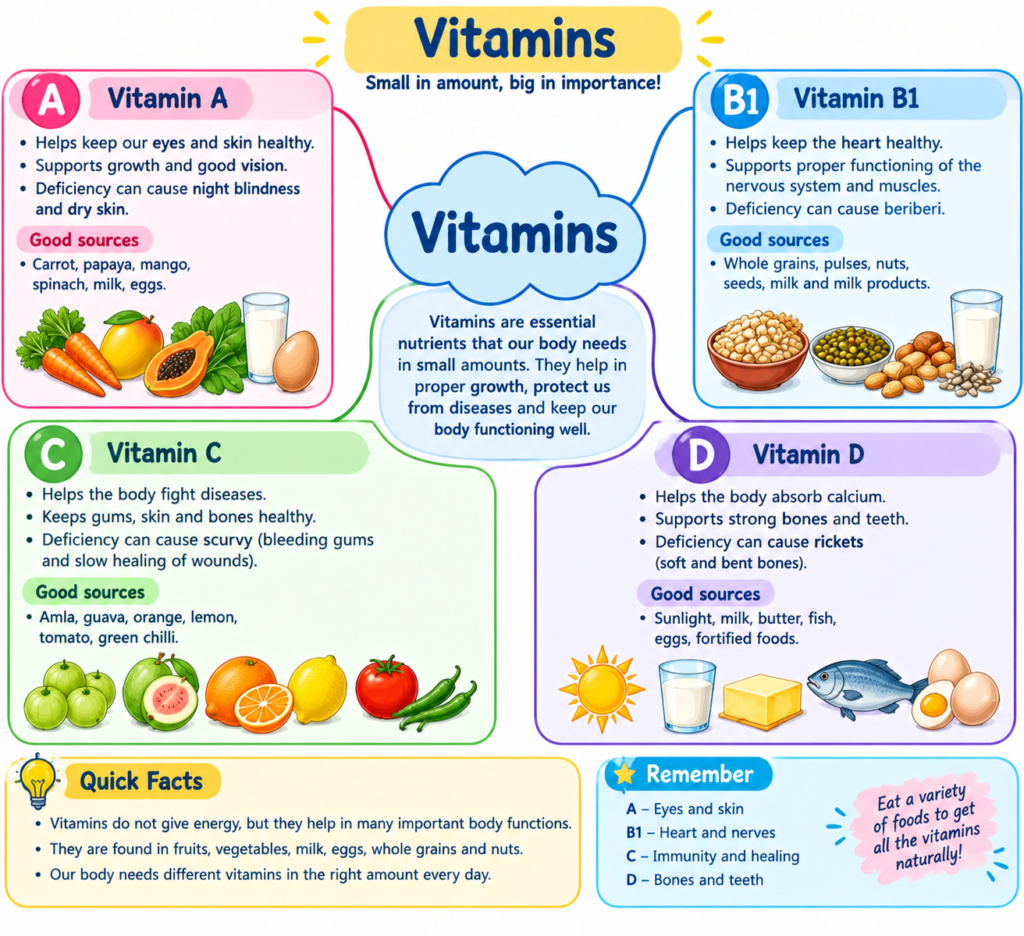
Vitamins and Its Types
- Vitamins are required by our body in small amounts, but they are essential for good health.
- They help in proper growth and protect the body from various diseases.
- Vitamins A, B1, C and D are discussed in this chapter.
- Vitamins are called protective nutrients along with minerals.
Vitamin A
- Helps keep our eyes and skin healthy.
- Sources include carrot, papaya, mango and milk.
- Deficiency may cause poor vision and night blindness.
Vitamin B1
- Helps keep the heart healthy and supports various body functions.
- Sources include legumes, nuts, whole grains, seeds and milk products.
- Deficiency causes beriberi.
Vitamin C
- Helps the body fight diseases.
- Sources include amla, guava, orange, lemon and green chilli.
- Deficiency causes scurvy, which may lead to bleeding gums and slow healing of wounds.
Vitamin D
- Helps the body absorb calcium and supports healthy bones and teeth.
- Sunlight, milk, butter, fish and eggs are sources.
- Deficiency can cause rickets, leading to soft and bent bones.