
Class 6 Diversity in the Living World Worksheet — Chapter 2 Science
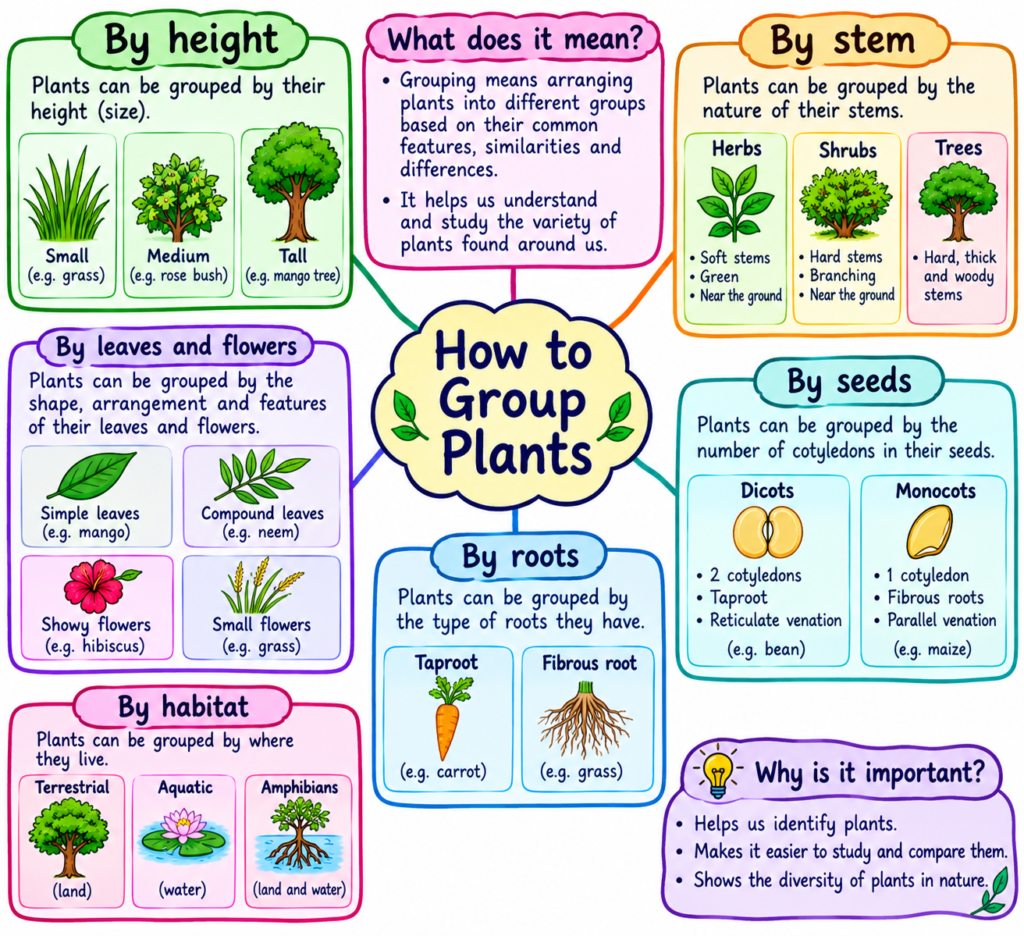
Chapter 2 introduces young learners to the incredible variety of plants and animals found around us, and to the simple, logical ways scientists group them. Through a nature walk with Dr Raghu and Maniram chacha, students explore how plants can be classified as herbs, shrubs, and trees based on their height and stem, and how leaves show either reticulate venation or parallel venation. The chapter also explains taproots and fibrous roots, and how the number of cotyledons in a seed tells us whether a plant is a monocot or a dicot.
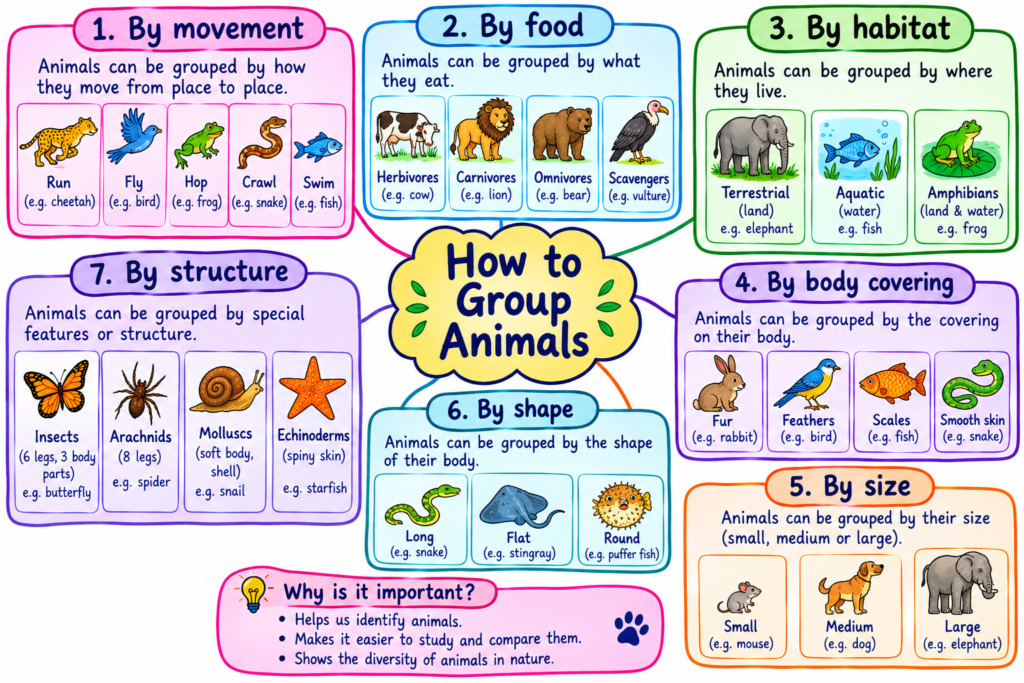
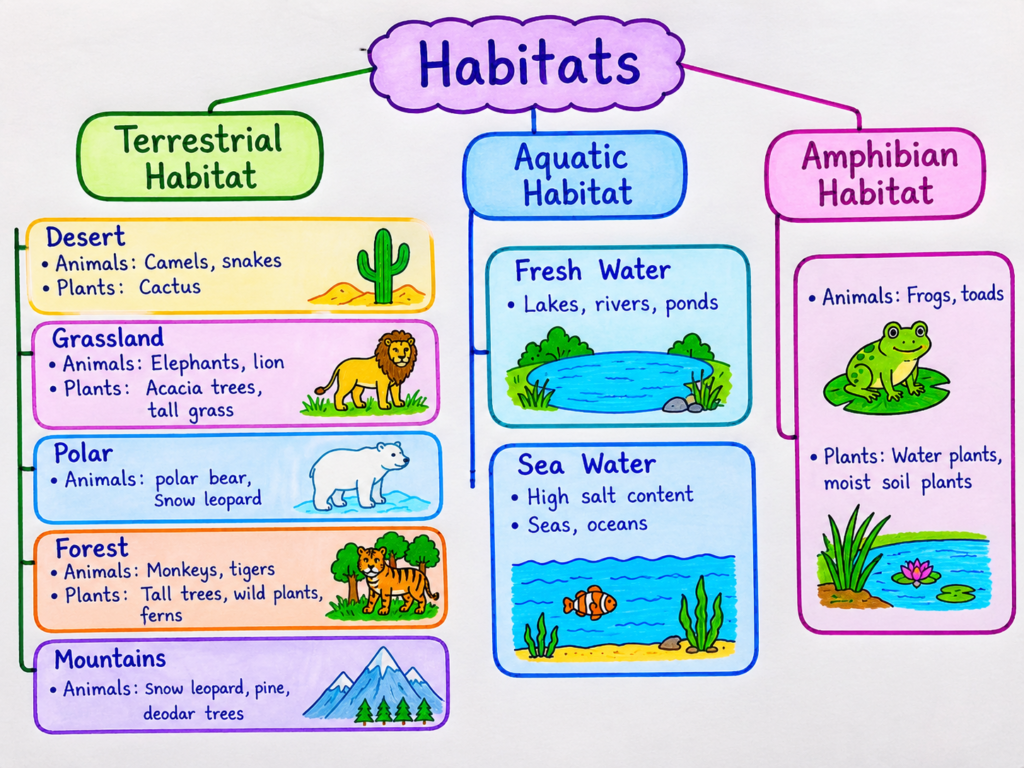
Beyond plants, the chapter looks at how animals move — using legs, wings, or fins — and how their body parts are adapted to their surroundings. Students learn about terrestrial and aquatic habitats, amphibians, and the fascinating adaptations that help camels survive in hot and cold deserts, or that let a deodar tree shrug off mountain snow. The chapter closes with an important message about biodiversity loss, habitat protection, sacred groves, and real conservation efforts like Project Tiger and the Cheetah Reintroduction Project.
Every Class 6 Diversity in the Living World Worksheet on this page — from multiple choice questions to case studies and picture-based questions — is written to match the CBSE Class 6 syllabus and difficulty level, with clear, student-friendly answers included at the end of every worksheet. Whether you are a student preparing for a class test, or a parent or teacher looking for ready-to-use practice sheets, these downloadable worksheets on class 6 diversity in the living world make revision simple and effective.
Explore more chapters and subjects on the cbseclassworksheets.com, where you’ll find similarly structured worksheets, case studies, and picture-based practice sets for every unit of the Class 6 CBSE curriculum.
Class 6 Chapter 2 Science Question Answer
Class 6 Science Chapter 2 Diversity in the Living World Worksheet
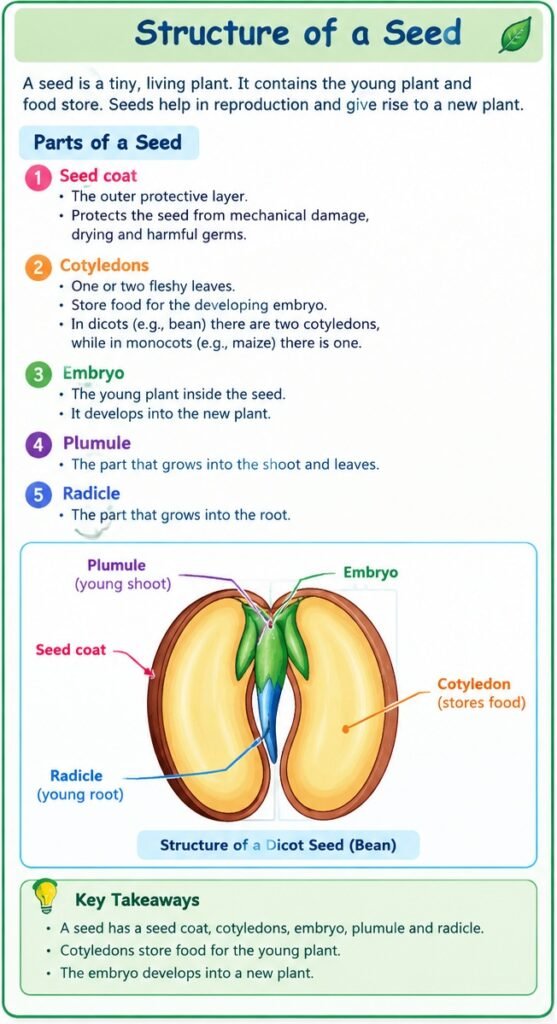
Structure of a Seed
A seed contains a tiny young plant and the food needed for its early growth. A bean seed is a good example of a dicot seed.
Parts of a Seed
1. Seed Coat
- The seed coat is the outer covering of a seed.
- It protects the seed from damage and drying.
- It also protects the young plant inside the seed.
- In a soaked bean seed, the seed coat can be removed easily.
2. Cotyledons
- Cotyledons are the fleshy parts inside the seed.
- They store food for the developing young plant.
- A bean seed has two cotyledons, so it is called a dicot seed.
- The stored food provides energy to the embryo during the early stages of growth.
3. Embryo
- The embryo is the young plant present inside the seed.
- It develops into a new plant when the seed gets suitable conditions.
- The embryo has parts that develop into the root and shoot of the plant.
4. Plumule
- The plumule is the part of the embryo that develops into the shoot.
- It gives rise to the young stem and leaves.
- During germination, the plumule grows upwards.
5. Radicle
- The radicle is the part of the embryo that develops into the root.
- It is usually the first part of the embryo to emerge during germination.
- The root helps the young plant absorb water and minerals from the soil.
Parts of a Leaf
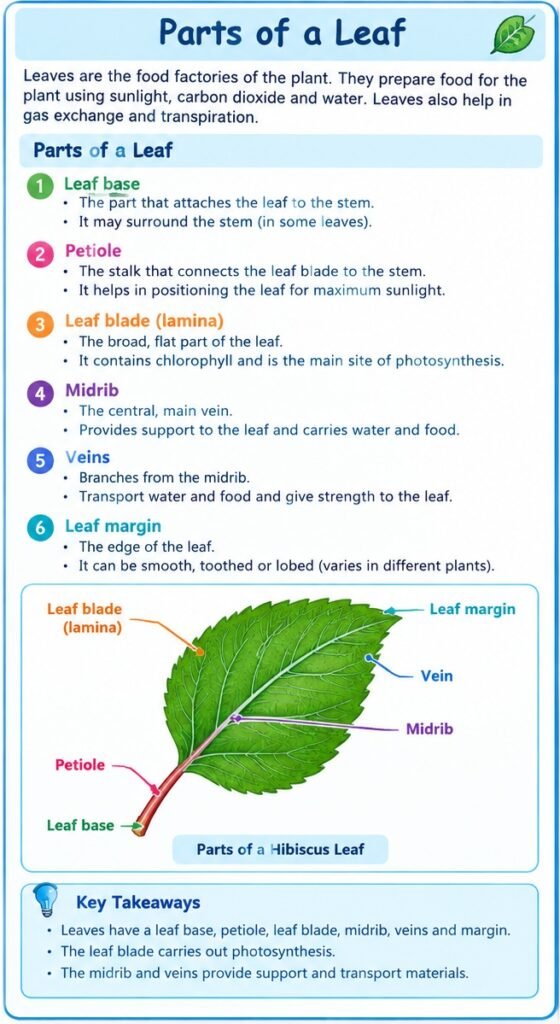
A leaf is an important part of a plant. Leaves generally prepare food for the plant through photosynthesis. They also help in the exchange of gases and loss of water vapour through transpiration.
Main Parts of a Leaf
1. Leaf Base
- The leaf base is the part where the leaf is attached to the stem.
- It provides support to the leaf.
- In some plants, the leaf base may partly surround the stem.
2. Petiole
- The petiole is the stalk that connects the leaf blade to the stem.
- It holds the leaf in a suitable position to receive sunlight.
- It also helps in the transport of water and food between the stem and leaf.
3. Leaf Blade or Lamina
- The leaf blade, also called the lamina, is the broad and flat part of the leaf.
- It is usually green because it contains chlorophyll.
- It is the main part where photosynthesis takes place.
- Its broad surface helps the leaf receive sufficient sunlight.
4. Midrib
- The midrib is the main and prominent vein running through the centre of the leaf.
- It gives support and strength to the leaf.
- It helps in transporting water and other substances through the leaf.
5. Veins
- Veins are thin structures that branch out from the midrib.
- They form a network throughout the leaf.
- They help transport water and nutrients to different parts of the leaf.
- They also provide support to the leaf blade.
6. Leaf Margin
- The leaf margin is the outer edge of the leaf.
- The margin may be smooth, toothed, or have other shapes depending on the plant.
- In a hibiscus leaf, the margin is generally toothed.